


Ask any chef, stall owner or catering manager what keeps customers coming back, and taste usually comes first. Yet safe food sits right behind it. If you work around food, a food safety course gives you the habits that protect every plate you serve. Still, many people wonder whether the training is truly required or simply nice to have. Let’s look at what the training involves and why Singapore treats it seriously.
Why Every Food Handler Needs a Food Safety Course
Here’s the short answer. In Singapore, the WSQ Food Safety Course Level 1 is a requirement for food handlers. This one day accredited programme gives learners the essential knowledge and skills to follow food and beverage safety and hygiene policies and procedures. Participants who complete it become qualified food handlers under Singapore Food Agency requirements. So yes, it’s necessary. Nobody wants to guess their way through food handling when a customer’s health is on the line.
The rules go further for certain businesses. Under the SAFE framework, all food handlers in non retail food establishments, such as caterers and food manufacturers, must attend and pass the Level 1 programme. That means employers can’t treat training as optional. Besides that, the people who serve customers also benefit. Managers, captains, waiters and cashiers all touch the dining experience, so they should understand basic hygiene as well.
What You Learn in a Food Hygiene Course Singapore Offers
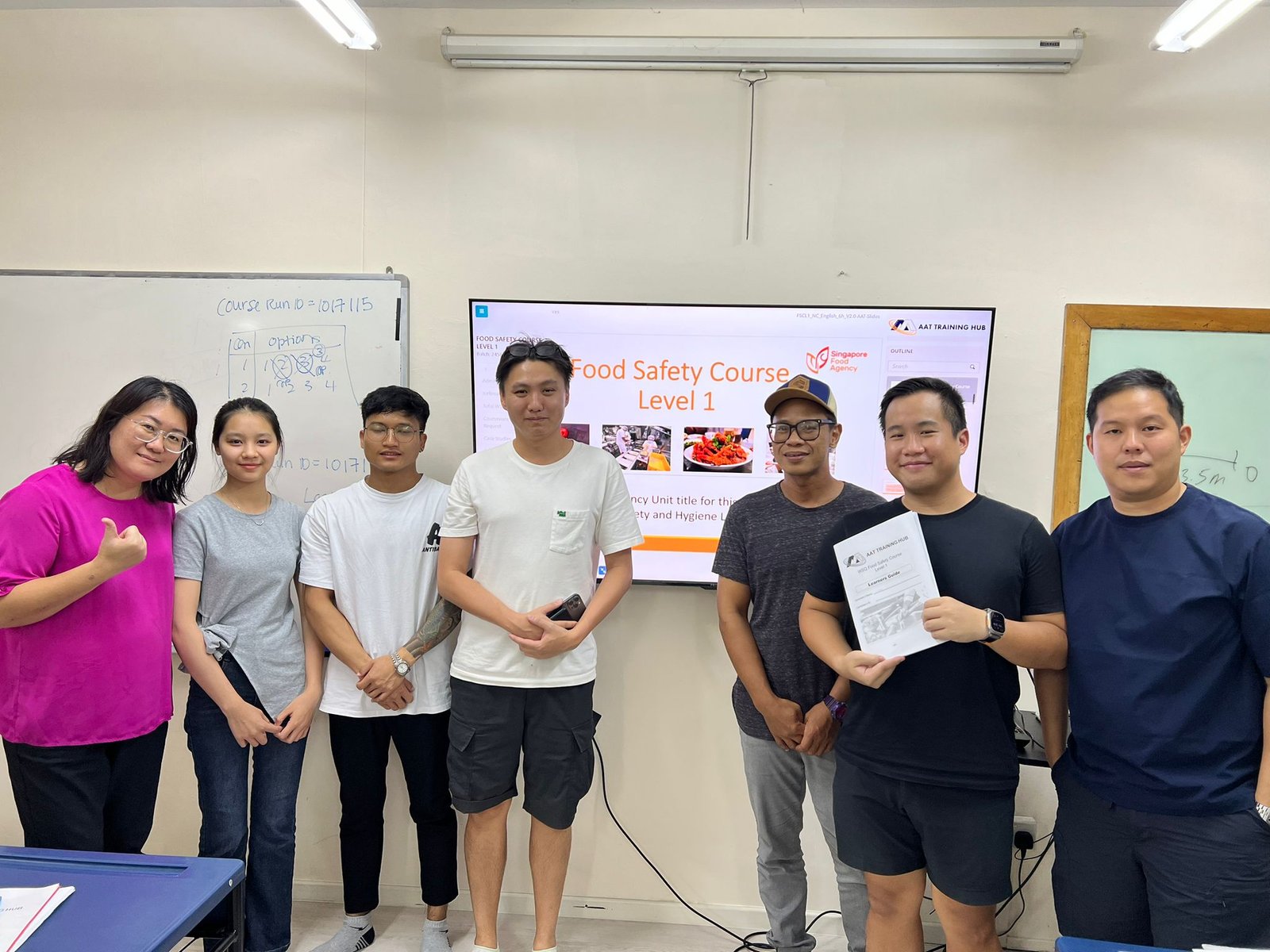
Joining a food hygiene course Singapore approved by the Singapore Food Agency keeps things simple. The syllabus focuses on the daily work of handling food. Learners study five main areas that shape how a kitchen runs from morning prep to closing time. Each topic connects to a real risk, from dirty hands to badly stored ingredients. Because the content is practical, you can apply it the very next shift. Here’s what the training covers.
- Practising good personal hygiene
- Using safe ingredients
- Handling food safely
- Storing food safely
- Keeping utensils, equipment and service or storage areas clean
Personal Hygiene Habits a Food Safety Course Teaches
Personal hygiene gets plenty of attention, and for good reason. Hands carry bacteria, so food handlers must wash with soap and warm water for at least 20 seconds. That applies before handling food, after using the toilet, and after coughing, sneezing or blowing the nose. Touching hair or other body parts counts too. Meanwhile, tied back hair, clean clothing changed daily, and good oral habits keep contamination away from the food.
Who Should Attend a Food Safety Course?
The audience is wider than most people expect. Food handlers, meaning anyone who prepares food and beverage products in NEA or SFA licensed eating establishments, are the main group. Yet personnel who primarily serve customers should attend too. Think of managers, captains, waiters, cashiers and other service staff. Everyone on the floor or in the kitchen shares responsibility for safe food, so training the whole crew just makes sense.
Think about what one mistake can cost. A single case of cross contamination can spread harmful bacteria from one food or surface to another, and customers rarely forget that kind of experience. Training teaches handlers to clean and sanitise surfaces, utensils and equipment regularly. As a result, mistakes drop. In the long run, any food hygiene course Singapore teams attend protects both reputation and revenue.
What a Food Hygiene Course Singapore Costs and Delivers
Practical details matter, so here they are. The course runs for 7.5 hours, including six hours of theory and 1.5 hours of assessment. Fees are $140 before GST and grants, and SkillsFuture funding is available. After you pass the exam, you receive the Food Hygiene SOA or certificate issued by SkillsFuture Singapore and recognised by the Singapore Food Agency. That certificate stays valid for five years.
AAT Training Hub began operating in 2005 and has trained tens of thousands of professionals, so its food hygiene course Singapore classes draw on long experience. Classes take place from 9am to 5.30pm at Farrer Park or Kaki Bukit, and lessons run in English, Mandarin, Malay and Tamil depending on the batch. Entry requirement is simple. You need to read, write and understand basic English, Malay, Tamil or Chinese.
Training doesn’t stop after the first certificate. Food hygiene certificates stay valid for five years, so handlers should plan a refresher afterward. Refresher options come in English, Malay, Tamil and Chinese, and one version runs as a synchronous online class. That flexibility helps busy teams schedule learning around shifts, not the other way around. Overall, ongoing training keeps good habits fresh long after the first class.
So, Is a Food Safety Course Worth Taking?
So, is it necessary? For anyone who prepares or serves food in a licensed establishment, the answer is a confident yes. The training is short, accessible and recognised by the Singapore Food Agency. Choose a food safety course that fits your language and schedule, then book a session soon. And if you want your team to stay sharp, a food hygiene course Singapore teams can attend is a smart investment that keeps customers safe and coming back.